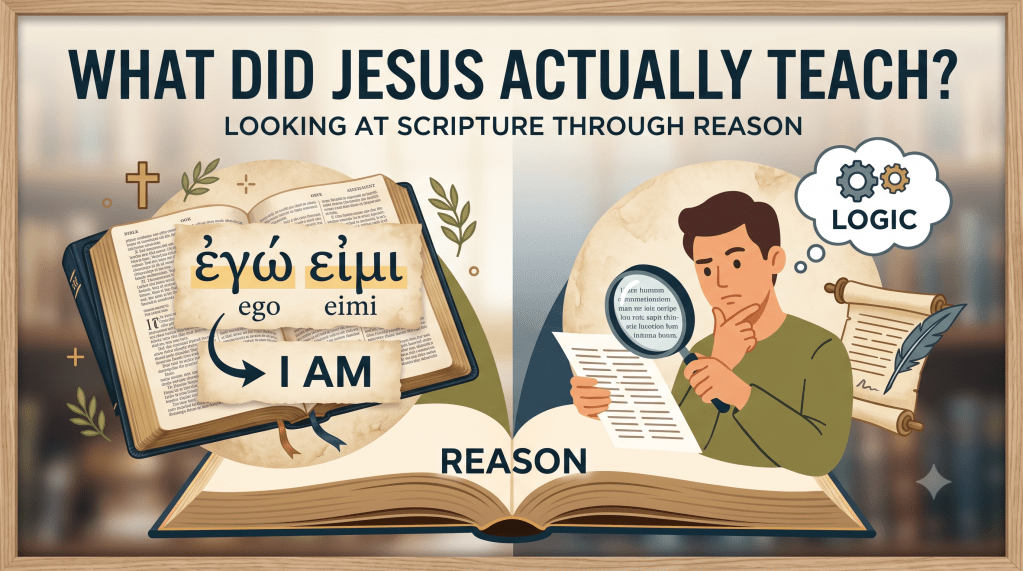
Looking at Scripture Through Reason
Many of us grow up holding deep beliefs simply because they were taught to us by our parents, teachers, or communities from a young age. We rarely stop to ask a fundamental question: Does what I believe actually make logical sense when I examine it for myself?
When Christians and Muslims try to talk about faith, the conversation often breaks down. It can feel like two people speaking completely different languages, with both sides getting defensive.

However, Gary Miller, a former Christian missionary and mathematician who spent years studying the Bible before embracing Islam, suggests a different approach. He argues that we do not need complex philosophy or heated arguments. Instead, if we simply clear our minds, set aside our emotional biases, and use basic, objective logic, we can look at the Bible with fresh eyes.
This article explores some of the most critical historical, language, and logical questions surrounding traditional Christian doctrine based on the lectures and writings of Gary Miller.
Whether you are a Christian, a Muslim, or simply someone searching for truth, this is an invitation to look honestly at what the original scriptures actually say.
1. Two Golden Rules for an Honest Search for Truth
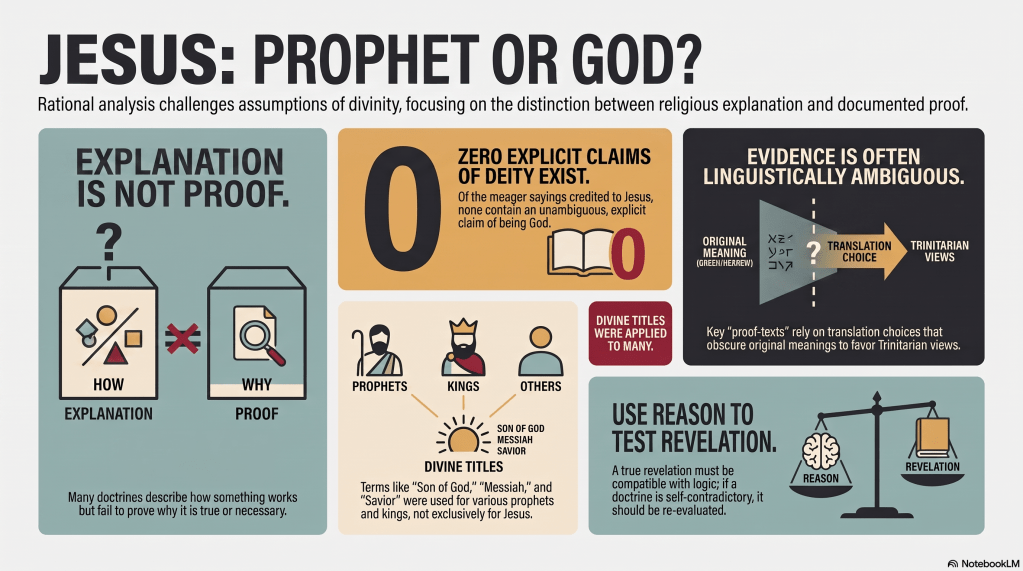
Before we can look at any religious claim, we need to agree on how to test whether something is true. In mathematics and science, you cannot just make a claim; you have to prove it step by step. Dr Miller suggests applying two simple, common-sense rules to religious discussions to keep us from being misled.
Rule A: Explaining a Belief Is Not the Same as Proving It
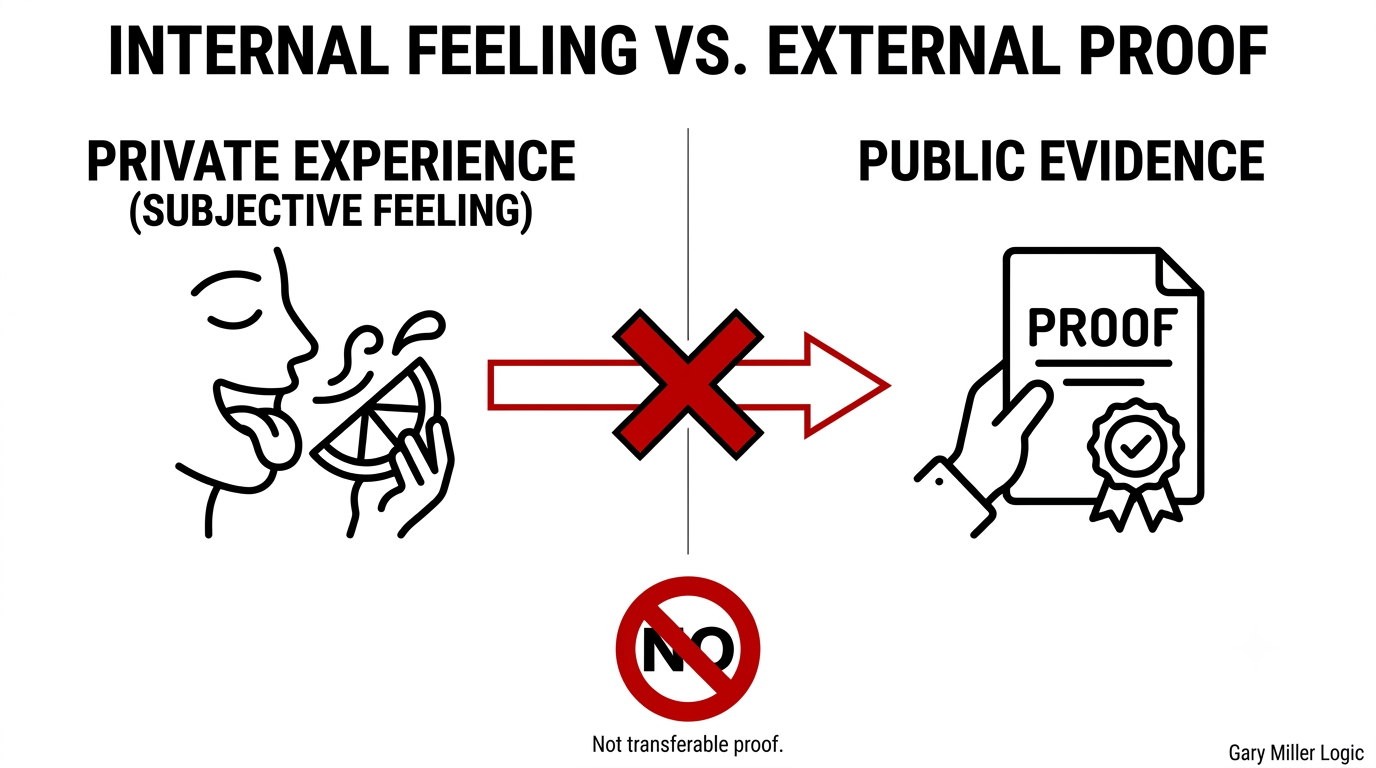
It is very easy to tell a beautiful, deeply moving story about what you believe. But just because a story is beautiful, comforting, or detailed, that does not mean it is objectively true.
For example, imagine someone tells you, “I know my faith is true because I feel the love of Jesus deep inside my heart every single day.”
We should respect that person’s personal experience, but a private feeling cannot be passed to someone else as hard evidence. It is like watching another person eat a ripe, sweet orange. They can describe the taste to you all day long but watching them eat it does not allow you to taste it. Personal feelings are subjective.
Furthermore, history shows us that many ancient, pagan religions, such as the worship of the Roman god Mithras or the Egyptian god Osiris, had beautiful stories about virgin births, dying gods, and resurrections long before Christianity existed. A familiar or poetic story does not guarantee that it happened in real life.
Rule B: The Evidence You Give Must Match the Claim You Are Making

When people try to convince you of a point, watch closely to make sure their evidence actually proves what they say it proves.
Imagine a television commercial for a paper towel. The voiceover claims, “Our paper towel picks up spills faster than any other brand!” But then, the video on screen only shows that their paper towel can hold a large amount of water without tearing. Holding more water is not the same as picking up water faster. The visual test does not prove the original claim!
We see this exact logical mistake in religious debates all the time. A speaker might spend thirty minutes giving historical facts to prove that the Bible is a very old and historically preserved book. Then, at the end, they jump to the conclusion: “Therefore, this proves that Jesus is God!”
Can you spot the mismatch? The historical age of an ancient manuscript has nothing to do with whether a human being living in Galilee was the Almighty God. The evidence presented does not support the claim being made.
2. What the Original Greek Scriptures Actually Say
Most people today read the New Testament in modern translations like English, Spanish, or French. However, the New Testament was originally written in ancient Greek. When we look closely at the original Greek manuscripts, we find that several key verses used to teach that “Jesus is God” are actually basic translation errors or misunderstandings.
The “I Am” Statement (John 8:58)
In John 8:58, Jesus says to his critics: “Before Abraham was, I am.”
Traditional Christian teachers often point to this verse and say: “Look! Jesus is using the exact name that God used when speaking to Moses at the burning bush in Exodus 3!”
When we check the ancient manuscripts, this connection falls apart:
- In the ancient Greek translation of the Old Testament (known as the Septuagint), when God reveals His name to Moses, the Greek phrase used is Ho On (which means “The Existing One” or “The Eternal”).
- However, in John’s Gospel, when Jesus says “I am”, the Greek text records the words ego eimi.
- Ego eimi is not a holy title. It is simply the everyday, ordinary Greek phrase for “I am” or “it is me.” In fact, in John chapter 9, a blind man healed by Jesus uses the exact same Greek phrase (ego eimi) to tell the crowd, “I am the man who was blind!” Nobody thought the blind man was claiming to be God.
If the author of John had wanted to show that Jesus was using God’s holy name from Exodus, he would have written Ho On. By writing ego eimi, the text simply shows Jesus stating that he existed in God’s knowledge or presence before Abraham was born.
Furthermore, if existing before birth makes someone God, we would have to call the prophet Jeremiah God as well! In Jeremiah 1:5, God tells Jeremiah: “Before I formed you in the womb I knew you, before you were born I set you apart.” Pre-existence in God’s plan does not mean a person is divine.
The “Oneness” Claim (John 10:30)
In John 10:30, Jesus says: “I and the Father are one.”
Many readers assume this means Jesus and God are the exact same divine being. But let us look at the Greek word used for “one”:
- The Greek word written here is hen (written in the neuter form), which means unity of purpose, mind, or action – like two people working as a single team.
- If the text meant that they were the exact same physical or divine substance, the masculine word heis would have been used.
We know for certain that hen means unity of purpose because Jesus uses the exact same word a few chapters later. In John 17:21–22, Jesus prays to God for his followers, asking: “That they all may be one [hen], as You, Father, are in me, and I in You; that they also may be one [hen] in us.”
If the word hen makes Jesus God, then Jesus praying that his twelve human disciples become hen would make all twelve disciples God too! That would be impossible. Clearly, Jesus was talking about being united in purpose and faith, not sharing God’s divine essence.
The “Only-Begotten” Son (John 3:16)
John 3:16 is one of the most famous verses in the Bible, traditionally translated as: “For God so loved the world that He gave His only-begotten Son…”
The phrase “only-begotten” makes it sound as though God physically fathered a child. But let us examine how that same Greek word, monogenes, is used elsewhere in the Bible.
In Hebrews 11:17, the Bible uses the word monogenes to describe Abraham’s son Isaac. Yet, every reader of the Bible knows that Isaac was not Abraham’s only son! Abraham had an older son, Ishmael, born years before Isaac.
Why then did the Bible call Isaac monogenes? Because in that context, the word did not mean “literally the only child ever born.” It was an expression meaning “a unique, special, or deeply beloved son.”
If monogenes is a symbolic expression when used for Isaac, it must also be understood as a symbolic expression of love and favor when used for Jesus. It does not mean God literally fathered a child.
3. The Logical Conflict of the “God-Man”
Traditional Christian theology teaches that Jesus was simultaneously 100% God (uncreated, all-powerful, all-knowing) and 100% human (created, limited, weak).
While this is often called a “holy mystery,” Dr Miller points out that it is actually a direct logical contradiction.
The Square-Circle Problem
Logic is the framework God gave us to understand reality. A thing cannot be two opposite things at the same time.
For example, you can have a circle, and you can have a square. But you cannot have a “square-circle.” If you draw a shape and say, “This shape is 100% a square, but it is also 100% round and has no corners,” you are not describing a mystery, you are using words that cancel each other out.
In the same way:
- God is, by definition, uncreated, unlimited, immortal (cannot die), and needs nothing.
- A human is, by definition, created, limited, mortal (can die), and needs food, sleep, and water.
To say a single person was fully God and fully human at the same time is like saying a shape is a “square-circle.” It is a contradiction in terms.
The Power Dilemma
Consider what happened when Jesus walked on Earth: Did he keep his all-powerful divine abilities, or did he give them up?
- If he kept his divine power: Then he was not truly a human being. A real human cannot know the future on their own, cannot perform miracles by their own power, and cannot be immune to human limitations.
- If he gave up his divine power: Then he was no longer God. God cannot “turn off” His divinity, because God does not change.
This dilemma was summarized long ago by early scholars: “If he was God, he could not die. If he died, he was not God.”
True Forgiveness vs. Paying a Debt
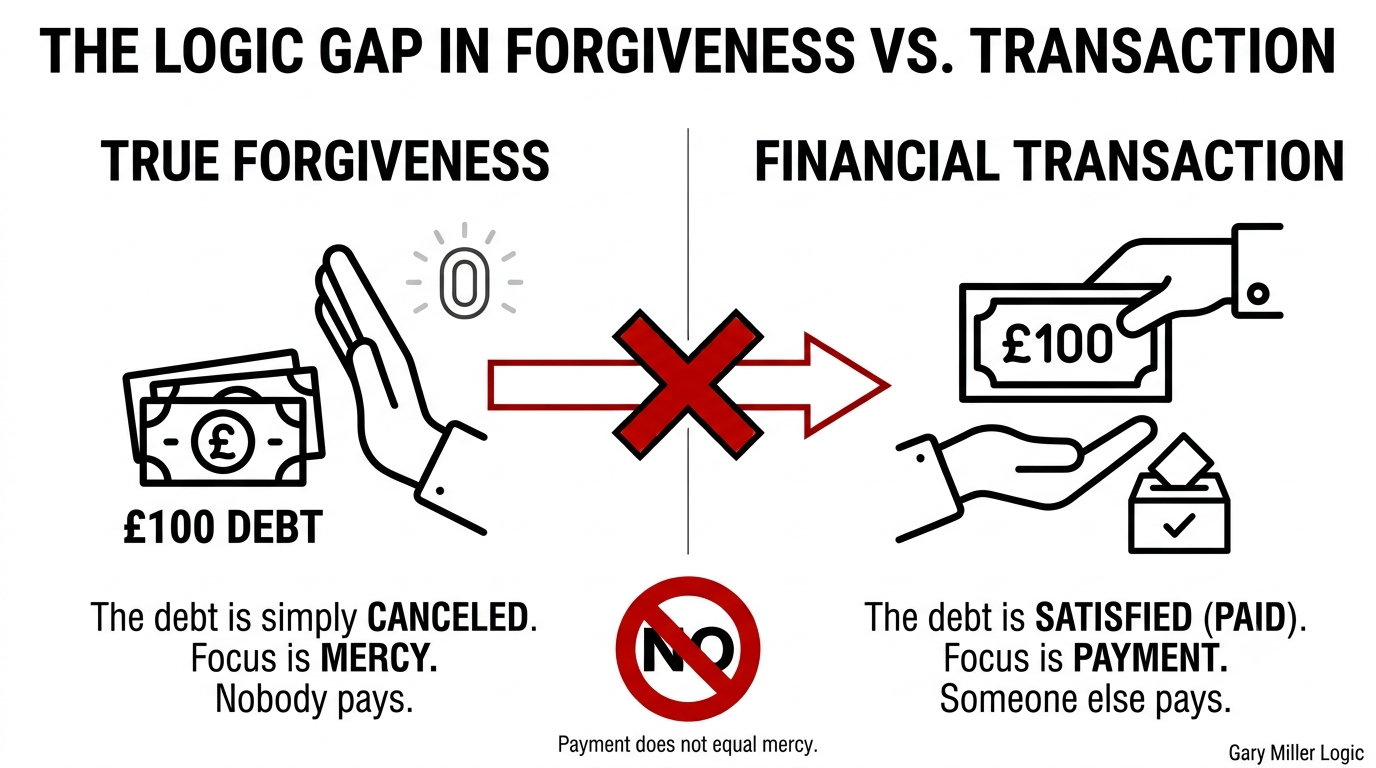
Traditional theology teaches that humanity sinned, and because God is perfectly just, He could not simply forgive humans without demanding a punishment. Therefore, Jesus had to suffer and die on the cross to “pay the debt” for our sins.
But think about what the word forgiveness actually means in everyday life.
If a friend borrows £100 from you, and you say, “Don’t worry about it, I forgive the debt,” what happens? Nobody pays. You absorb the loss out of kindness. That is what forgiveness is.
Now imagine your friend cannot pay you back, so your brother steps in and gives you £100 to clear your friend’s debt. That is a financial transaction or a payment, it is not forgiveness.
God is the Supreme, Almighty Creator (As-Samad). He does not owe anyone anything, nor is He forced to follow external financial rules. God possesses the absolute power to forgive anyone He chooses directly out of His infinite mercy, without requiring a bloody sacrifice first.
4. What Does the Bible Say About Its Own Writers?
Many modern Christians are taught that every single word in the Bible was dictated directly by God and contains zero errors. However, if you read the Bible carefully, the writers themselves openly admit that they were simply human beings writing down their own thoughts, memories, and research.
Human Admissions Inside the Text
- Luke’s Gospel (Luke 1:1–4): Luke opens his book not by saying “God spoke to me,” but by explaining that because many others had written accounts, “it seemed good to me also, having investigated everything carefully from the beginning, to write it down for you.” Luke admits his book is the result of his own personal historical research.
- Paul’s Letters (1 Corinthians 7:25): The Apostle Paul explicitly tells his readers: “Now concerning virgins I have no command from the Lord, but I give an opinion as one who by the mercy of the Lord is trustworthy.” Paul openly distinguishes between a command from God and his own personal advice.
- Human Forgetfulness (1 Corinthians 1:16): In the same letter, Paul tries to remember who he baptized in the past. He writes: “I baptized also the household of Stephanas; beyond that, I do not know whether I baptized any other.” If God were dictating every word directly, God would not “forget” who was baptized!
The “Original Manuscripts” Argument
When historical, mathematical, or geographical errors in the Bible are pointed out, some theologians argue: “The Bible was only 100% perfect in its original, hand-written manuscripts. The mistakes we see today are just copying errors made by scribes over hundreds of years.”
While this sounds reasonable at first, it creates a serious problem. If the original manuscripts were lost centuries ago, and all we have left today are copies containing errors, then no one living today possesses the “perfect word of God” in that text.
Furthermore, this argument contradicts verses like Isaiah 40:8, which promises that God’s true word stands forever and is never lost or corrupted.
5. Looking Closely at the Story of the Crucifixion
The central belief of traditional Christianity is that Jesus died on the cross for the sins of the world and was resurrected three days later. However, when we read the details in the Gospels with a critical eye, the narrative points to a very different conclusion.
The “Sign of Jonah”
In Matthew 12:38–40, some religious leaders ask Jesus to perform a miraculous sign to prove he is sent by God. Jesus replies:
“An evil and adulterous generation craves for a sign; and so no sign will be given to it but the sign of Jonah the prophet; for just as Jonah was three days and three nights in the belly of the sea monster, so will the Son of Man be three days and three nights in the heart of the earth.”
Think about the story of Jonah: When Jonah was thrown overboard into the stormy sea and swallowed by the great fish, was he dead or alive?
Jonah was alive in the stormy sea, alive inside the fish, and he came out alive onto the dry land! That was the miracle. If Jonah had died inside the fish, it would not have been a sign of miraculous protection, it would just be a dead body inside a fish.
Therefore, for Jesus to fulfill the “Sign of Jonah,” he had to enter the tomb alive and come out of the tomb alive. If Jesus died on the cross, he failed to fulfill the only sign he promised to give.
Jesus Proves He Is Alive, Not Resurrected
In Luke 24:36–43, Jesus appears to his disciples after the events of the cross. The disciples are terrified, believing they are seeing a ghost or a spirit returned from the dead.
Notice how Jesus proves his identity to them:
- He tells them to touch his hands and feet: “Touch me and see; for a spirit does not have flesh and bones as you see that I have.”
- He asks them for food, and he sits down and eats a piece of cooked fish in front of them.
Why did Jesus do this? A resurrected, spiritualized body does not need physical food, nor does a ghost have physical flesh and bones. Jesus was demonstrating to his shocked followers that he had survived the ordeal, that he was still a living, breathing human being with a physical body.
The Answered Prayer in Gethsemane
On the night before his arrest, Jesus went to the Garden of Gethsemane. The Gospels describe him falling to the ground in deep agony, sweating drops like blood, praying passionately to God: “My Father, if it is possible, let this cup [of death] pass from me.”
Was this prayer answered?
The New Testament letter to the Hebrews answers this question directly. In Hebrews 5:7, speaking of Jesus, it says:
“In the days of his flesh, he offered up both prayers and supplications with loud crying and tears to Him who was able to save him from death, and he was heard because of his devoutness.”
The text clearly states that Jesus prayed to be saved from death, and God heard and answered his prayer. If God answered his prayer, God protected him from dying on the cross.
6. The Unfinished Prophecy: Who Was Coming Next?
In the Gospel of John, during his final talks with his disciples, Jesus promises that God will send another guide after he departs:
“And I will ask the Father, and He will give you another Comforter [Paraclete], that he may be with you forever.” (John 14:16)
Christian tradition often teaches that this “Comforter” is the Holy Spirit. But when we analyze the original Greek text, a different picture emerges.
The Greek Grammar: Allos vs. Heteros
In ancient Greek, there are two distinct words for “another”:
- Heteros means “another of a completely different kind” (for example, if you trade a physical book for a digital file).
- Allos means “another of the exact same kind” (for example, if you trade a physical book for another physical book).
In John 14:16, the text uses the word allos Parakletos, another guide of the exact same kind as Jesus.
Since Jesus was a physical, human prophet who walked the earth, ate food, and taught people with his voice, “another of the exact same kind” must refer to another physical, human prophet who would follow him, not an invisible spirit.
This explains why early Christian communities in the second and third centuries (such as the Montanists) were actively waiting for a new human prophet to appear in the world to fulfill this promise.
A New Nation
In Matthew 21:43, Jesus delivers a stern warning to the religious leaders of Israel who rejected his message:
“Therefore I say to you, the kingdom of God will be taken away from you and given to a nation producing the fruit of it.”
Jesus plainly states that spiritual leadership would no longer remain exclusively within the line of the Israelites. It would be given to another nation.
This connects directly back to the ancient promises in Genesis, where God promised to bless the descendants of Abraham’s firstborn son, Ishmael, and make him a great nation. Centuries after Jesus, the Prophet Muhammad, a direct descendant of Ishmael, was born in Arabia, bringing a message that turned millions of people away from idolatry toward the worship of the One True God.
Conclusion: Returning to the Simple Truth
Dr Gary Miller’s logical analysis of the Bible is not an attack on Jesus, nor does it ask Christians to stop loving and respecting him.
On the contrary, it is a warm, open invitation to love Jesus more by returning to what he actually taught. When we strip away the complex, confusing doctrines that were added by church councils centuries later, ideas that contradict basic logic, mistranslate simple Greek words, and misrepresent the nature of God, we find something remarkably clear.
We find a simple, beautiful message: that Jesus was a noble prophet and messenger of God who called humanity to worship the One, Undivided Creator. By testing our faith with reason, we find that the true teachings of Jesus lead us directly to the pure monotheism of Islam.
Notes
- YouTube Short: The Debate Mistake Atheists, Christians & Muslims Make
- YouTube Short: The Logic Flaw 99% of People Fall For
- YouTube: Why Your Personal Belief Isn’t “Proof” | Gary Miller




What do you think?