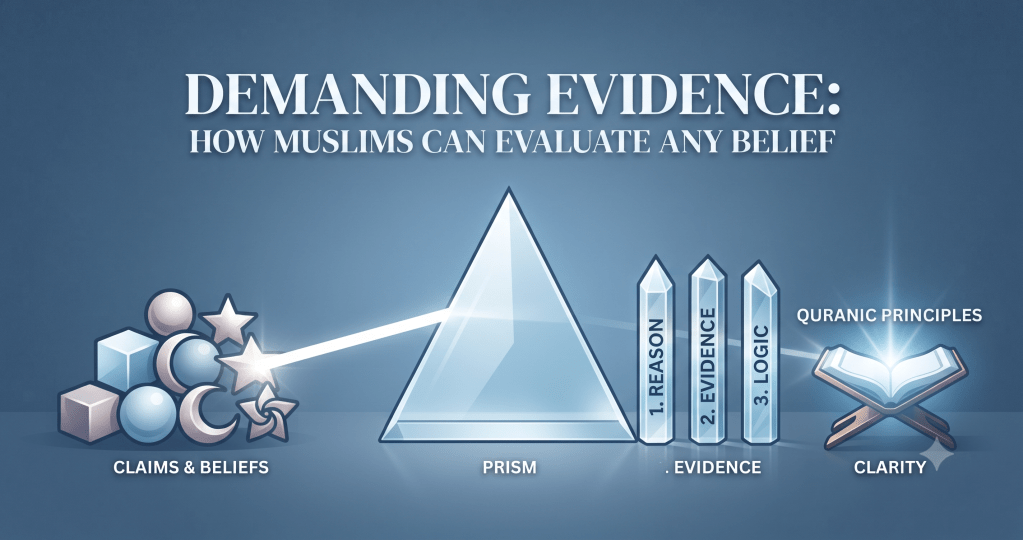

When dealing with Christian missionaries, followers of other faiths, or even atheists, the first thing to realise is that their foundational arguments are often built on the exact same logical structures. Because of this, you do not need an encyclopaedic knowledge of every religion or ideology; you simply need a clear head and a firm grasp of basic logical principles.
Here are the top points and logical frameworks you need to be aware of to effectively analyse and respond to their claims:
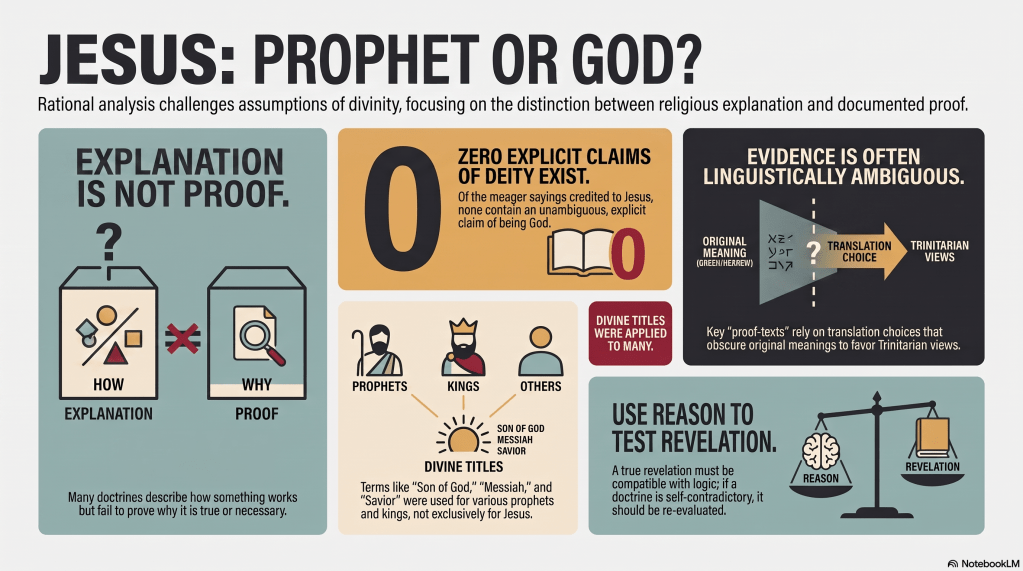
1. An Explanation is Not a Proof This is a recurrent theme throughout the Quran. A person might be able to tell you a beautiful, detailed story about what they believe and how it works, but that does not prove why it is true. As we discussed previously with the “tasting the orange” analogy, a missionary might claim they have “proof” because they have internally experienced Jesus or received a feeling in their heart, but a subjective internal conviction is not transferable, objective proof.
2. “Showing” Must Precisely Match “Telling” When an opponent presents evidence (showing), you must watch closely to ensure it actually proves the specific claim they are making (telling), rather than proving an entirely different point. For example, a missionary might spend twenty minutes proving that the Bible is a historically old book. While they successfully proved its age, they will often use that as a leap in logic to claim they have proven Jesus is God. You must always demand that the evidence fits the exact claim.
3. Reason Must be the Test of Revelation If someone argues that faith supersedes reason or that “reason doesn’t always deliver the truth,” you must remind them that without reason, there is no way to differentiate between a true revelation from God and a false book written by an imposter. If a person abandons reason, they have no objective way to qualify or disqualify any religious claim.
4. Shift the Focus to “Why” Instead of “How” When faced with confusing or contradictory doctrines—such as the Trinity—Christians will often eventually fall back on the excuse that “these are things we cannot understand”. Instead of getting trapped trying to figure out how an illogical doctrine works, you should redirect the discussion to ask why it must be believed in the first place, and demand clear verification of its necessity.
5. Test the Evidence (Insufficient, Ambiguous, Impossible) When analyzing texts or claims, you should evaluate the evidence using three strict categories:
- Insufficient Evidence: Does the premise actually justify the conclusion? For example, some claim Jesus is divine because of his virgin birth. This is insufficient evidence, because Adam had neither a father nor a mother, yet no one claims Adam was God.
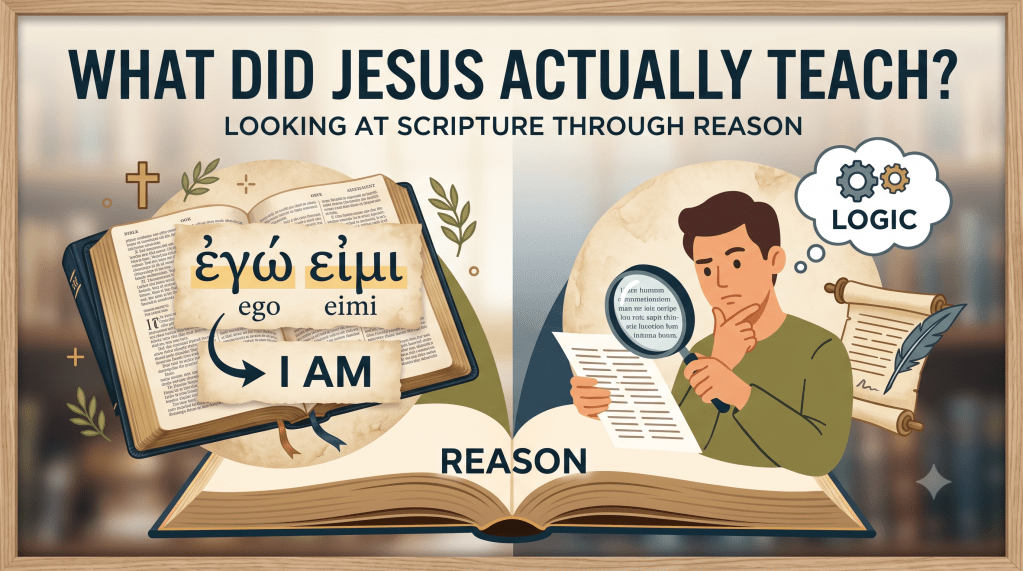
- Ambiguous Evidence: Can the statement be interpreted in multiple ways? If a verse or phrase (like “son of God” or “I am”) has more than one valid meaning, it cannot be forced as absolute proof for one specific doctrine.
- Impossible Evidence: Does the claim create a self-defeating contradiction? For example, the concept of the “God-man” creates an impossible paradox. If God became a man and kept His divine powers, He wasn’t truly a man; if He gave them up, He wasn’t God.
6. Beware of Confirmation Bias Anyone, no matter how absurd their belief (such as believing the earth is flat), can find people to agree with them and isolated pieces of physical evidence that seem to support their view. Understanding this prevents you from being overwhelmed simply because an opponent has gathered a few agreeable quotes or isolated texts to make them feel comfortable in their beliefs.
Ultimately, the Muslim priority when speaking to Christians is not initially to say “leave your religion,” but rather to encourage them to be better followers of Jesus by not exceeding his actual teachings or giving him a status he never claimed for himself.





What do you think?